By EBMOmniScope
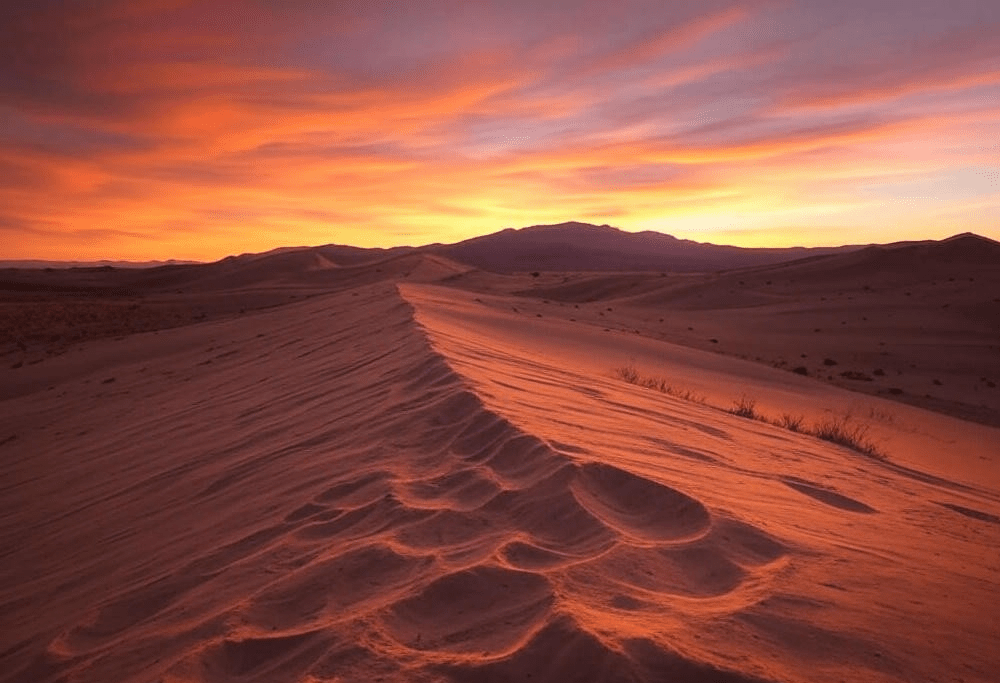
Imagine you’re trekking across a desert, the sun beating down, the horizon shimmering with heat. It’s silent—until it’s not. Suddenly, a low hum rises from the sand beneath your feet, like a cello warming up or a distant spaceship powering on. It grows into a haunting drone, vibrating through the air, maybe even your bones. You’re not hallucinating, and it’s not a movie soundtrack. It’s real. Some sand dunes sing, and the sound is as eerie as it is mesmerizing. But what’s behind this natural symphony? Why does sand decide to serenade us? Grab a water bottle and let’s wander into the weird, wonderful world of singing dunes.
The Sound of the Sands
Singing sand isn’t new—people have been hearing it for centuries. Marco Polo wrote about it in the 13th century, describing “evil spirits” making drum-like noises in the Gobi Desert. Bedouin nomads called it the “song of the sands” and spun tales of djinn playing tricks. Even Charles Darwin jotted notes about it during his travels. Today, we know it’s not ghosts or magic—it’s physics—but that doesn’t make it any less cool.
The sound can vary. Sometimes it’s a deep boom, like thunder rolling underground. Other times it’s a high-pitched whistle or a rhythmic bark. In California’s Kelso Dunes, it’s been compared to a foghorn. In Morocco’s Sahara, it might mimic a didgeridoo. Scientists have clocked these noises anywhere from 50 to 300 hertz—low enough to feel in your chest—and they can last seconds or minutes, loud enough to hear a mile away. It’s not every dune, though. Only about 40 spots worldwide, from Chile to Mongolia, have this talent. So, what’s the secret?
The Recipe for a Sandy Song
Turns out, singing sand is picky. It needs the right ingredients and conditions to perform. First, the sand itself has to be just so. Most singing dunes are made of quartz grains—tiny, tough crystals that have been polished by wind into near-perfect spheres. Size matters too: the grains are usually between 0.1 and 0.5 millimeters across. Too big or too small, and the magic fizzles.
Next, the sand needs to be dry. Moisture mutes it, which is why you won’t hear soggy beach sand belting out tunes. The dune’s shape plays a role too—steep slopes, often 30 degrees or more, set the stage. But the real kickstarter? Movement. When wind or a foot (yours, maybe) pushes the sand downhill, it starts to slide in layers. That’s when the music begins.
Picture this: as the grains tumble, they rub against each other, bouncing and vibrating like a million little drumsticks. Scientists think these collisions create pressure waves in the air trapped between the grains. Those waves sync up, amplifying into a sound you can hear. It’s like the sand’s throwing its own mini-concert, with each grain playing a note. The dune’s surface acts like a speaker, boosting the vibe. Cool, right?
The Science Gets Weird
But here’s where it gets wild: not all experts agree on the details. Some say the sound comes from the grains’ vibrations syncing up, a bit like a choir finding harmony. Others argue it’s more about the air itself, squeezed and released as the sand shifts, like a natural bellows. In 2007, French physicist Stéphane Douady tested this by making mini-dunes in a lab. He found that the frequency of the sound matched the speed of the sand’s flow—faster slides, higher notes. Slow it down, and the pitch drops.
Then there’s the “burping” theory. Some dunes don’t sing until a big avalanche happens, letting out a single, loud groan. Researchers in Qatar found that these bursts might come from air pockets collapsing deep in the dune, like a sandy belch. It’s not a constant hum—it’s a one-off roar. Different dunes, different styles. Nature’s got range.
Where to Hear the Show
If you’re itching to hear this for yourself, you’ve got options. In the U.S., head to Death Valley’s Eureka Dunes or Nevada’s Sand Mountain—both are known crooners. Chile’s Copiapó Desert has a famous singing spot, and Oman’s Wahiba Sands belt out tunes for lucky travelers. China’s Badain Jaran Desert boasts dunes so loud they’ve been nicknamed “Booming Sands.” Each place has its own flavor, shaped by the local sand and wind.
You don’t need fancy gear to trigger it—just scoot down a slope or kick some sand loose. Fair warning, though: it’s not a guarantee. The dune might be in a quiet mood if the wind’s off or the sand’s too wet. Patience is key. When it works, though, it’s a front-row seat to one of Earth’s strangest gigs.
Why It Freaks Us Out (and Thrills Us)
That eerie sound? It’s not just random noise—it taps into something deep. Low frequencies, like the ones singing dunes make, often signal big, powerful things in nature: thunderstorms, earthquakes, a lion’s roar. Our brains are wired to perk up at those rumbles, a leftover from when survival meant listening for danger. So when a dune starts humming, it’s thrilling but also a little spooky—like the Earth itself is whispering.
Add in the setting—vast, empty deserts—and you’ve got a recipe for awe. No wonder ancient travelers thought spirits were involved. Even today, the sound feels otherworldly, like a sci-fi soundtrack come to life. It’s raw, unpolished, and totally natural, which makes it stick with you long after the echo fades.
Sand’s Big Moment
Singing dunes aren’t just a cool party trick—they’re teaching us stuff. Geologists use the sound to study how dunes form and move. The vibrations hint at what’s happening under the surface, like a sandy X-ray. Some researchers even think it could help us understand distant planets. Mars has dunes, and if we ever hear them sing through a rover’s mic, it might reveal secrets about the Red Planet’s winds or soil.
Back on Earth, the phenomenon’s a reminder of how lively “dead” landscapes can be. Deserts aren’t just silent wastelands—they’ve got character, personality, and a voice. Next time you see a dune on TV or in a photo, imagine it humming a tune. It’s not as quiet as it looks.
Your Turn to Listen
So, why does sand sing? It’s a mix of perfect grains, dry air, and a good shove, all coming together to vibrate the world around them. It’s physics with a flair for drama. And why do we love it? Because it’s strange, beautiful, and a little bit wild—like a secret only the desert knows, shared with anyone brave enough to listen.
If you ever get the chance, chase down a singing dune. Slide down its slope, feel the rumble, and let the sand serenade you. It’s not just a sound—it’s a story, millions of grains strong, playing a song that’s been around longer than any of us. And if you can’t make the trip? Well, now you know the trick. Next time you’re near a sandbox, give it a kick and listen close. You might not get a symphony, but you’ll smile thinking about the dunes that do.

Leave a comment