By EBMOmniscope
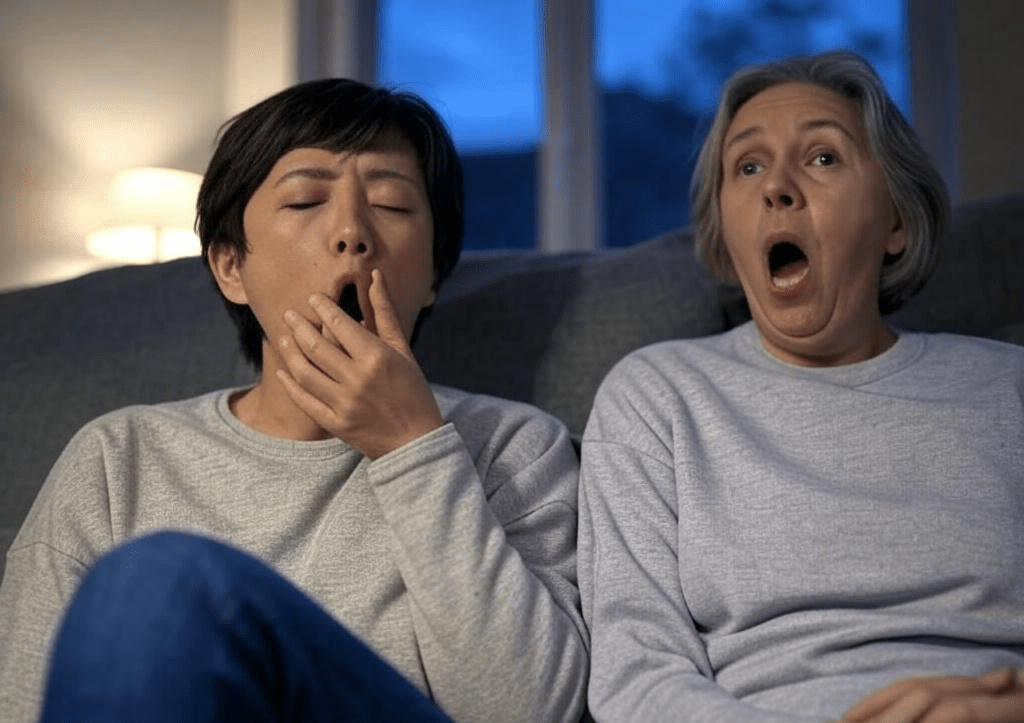
Yawn with me. Go on—open wide, let it out. Feel that stretch? Now picture this: you’re in a quiet room, someone yawns, and suddenly you’re doing it too. Then the guy next to you joins in, and it’s a sleepy domino effect. Why does that happen? Yawns aren’t germs, so why do they spread like a cold? It’s one of life’s little mysteries—half annoying, half hilarious—and the answer’s a wild mix of brain tricks, social glue, and maybe even ancient survival hacks. Let’s dig into the science of the yawn and why it’s the weirdest chain reaction you can’t resist.
The Yawn Basics
First, what is a yawn? It’s your mouth gaping, lungs gulping air, and sometimes a squeaky sound sneaking out. Scientists say it cools your brain—literally. Your head’s a hot little engine, and yawning’s like cracking a window when it overheats. A 2014 study found yawns peak when your skull’s temp climbs, like after a long day or a stuffy room. It’s why you yawn when you’re tired or bored—your brain’s begging for a breeze.
But here’s the kicker: yawning’s not just a solo act. See a yawn, hear a yawn, even think about yawning (admit it, you’re tempted now), and boom—you’re hooked. It’s contagious, and not just for humans. Dogs catch it from us. Chimps pass it around. Even parrots might join the party. So, what’s wiring us to copycat?
The Empathy Connection
One big clue? Your brain’s social side. Scientists point to mirror neurons—tiny cells that fire when you do something or see someone else do it. Watch a friend grab a snack, and your brain lights up like you’re munching too. Same with yawning. A 2003 study hooked people to brain scanners and showed them yawn videos. Guess what? The empathy zones—parts tied to understanding others—went wild. The more you care about someone, the more likely you’ll catch their yawn. It’s why your bestie’s yawn gets you, but a stranger’s might not.
Kids under four don’t do it much—they’re still building that empathy muscle. Same with folks on the autism spectrum, who often process social cues differently. It’s not a rule, but it hints yawning’s a “me too” signal, a way to sync up with your crew.
The Pack Instinct
Rewind a few million years. Our ancestors lived in groups—safety in numbers. Yawning might’ve been a silent memo: “I’m sleepy, let’s rest.” If one caveman yawned and the others followed, the whole gang could nap together, staying alert for saber-tooth tigers. A 2017 study on baboons backs this up—they yawn more when their troop’s winding down. It’s like nature’s group chat, keeping everyone on the same page.
Or maybe it’s a vibe check. Lions yawn to signal a hunt’s over—time to chill. For us, a shared yawn might say, “We’re cool, no stress here.” It’s less about words, more about feeling connected. Next time you yawn at a meeting, you’re basically primal-bonding with your coworkers. Weird flex, but okay.
The Mystery Lingers
Not everyone’s sold, though. Some say it’s simpler—yawning’s just catchy, like a laugh or a sneeze. Your brain sees a trigger and hits copy-paste, no deep meaning required. Others argue it’s about temperature still—if your pal yawns to cool off, you might need to as well in the same hot cave (or office). A 2011 experiment tested this: people yawned less with cold packs on their heads. So maybe it’s practical, not profound.
And get this—it’s not foolproof. About half of us catch yawns from watching them. The other half? Immune, smirking at the rest of us mid-gape. Why the split? No one’s cracked it yet. Maybe it’s personality, maybe it’s luck. Science is still yawning over the details.
The Yawn’s Sneaky Power
Here’s the fun part: yawning’s a ninja. You don’t decide to catch it—it just happens. Try resisting next time someone lets one rip nearby. Bet you can’t. It’s a reflex with swagger, sneaking past your willpower. And it’s universal—cross cultures, species, even time. Shakespeare’s characters yawned. Dinosaurs probably did too (imagine a T-Rex mid-roar). It’s the oldest trick in the book, and we’re all suckers for it.
So why’s it contagious? It’s your brain cooling off, your empathy flexing, and maybe your inner pack animal saying hi—all rolled into one stretchy, sleepy moment. Next time you spark a yawn chain, don’t blush—own it. You’re a walking biology lesson, and the room’s your lab.

Leave a comment