Tag: technology

  • Paid Subscriptions vs. One-Time Purchases

    Paid Subscriptions vs. One-Time Purchases

    In today’s digital economy, businesses and consumers are constantly navigating the trade-offs between two dominant monetization models: paid subscriptions and one-time purchases. Each approach has its advocates and detractors, with passionate arguments on both sides. We’ll explore the pros and cons of each model, using real-world examples to shed light on their impact on businesses and consumers alike. By the end, you’ll have a clearer picture of which model might be better suited for different scenarios—and why neither is a one-size-fits-all solution.


    Paid Subscriptions

    The subscription model is a win-win for both businesses and consumers. For businesses, it provides a steady, predictable revenue stream, which is crucial for long-term planning and investment. This stability allows companies to focus on continuous improvement, offering regular updates, new features, and ongoing support. Take Adobe Creative Cloud, for example. By switching from one-time purchases to subscriptions, Adobe can roll out frequent updates, integrate cloud storage, and ensure users always have the latest tools. This wouldn’t be sustainable with a one-time payment model.

    For consumers, subscriptions often mean lower upfront costs, making premium products more accessible. Instead of paying hundreds of dollars for software or services, users can spread the cost over time. Netflix is a prime example: for a modest monthly fee, subscribers get access to a vast library of content that’s constantly refreshed. This keeps users engaged without the need for large, sporadic payments.

    Moreover, subscriptions foster a closer relationship between businesses and customers. Companies are incentivized to keep subscribers happy, as churn (cancellations) directly impacts revenue. This leads to better customer service, more responsive updates, and a focus on user satisfaction.

    While subscriptions may seem appealing, they often trap consumers into paying more over time. A $10 monthly fee might feel insignificant, but over a few years, it adds up—often surpassing the cost of a one-time purchase. Additionally, users can feel locked into a service, especially if canceling is made difficult, as seen with some gym memberships or software subscriptions. This lack of flexibility can breed resentment, not loyalty.


    One-Time Purchases

    One-Time Purchase Advocate: The one-time purchase model empowers consumers with ownership and control. When you buy a product outright—whether it’s software like Microsoft Office or a video game like The Witcher 3—you pay once and own it indefinitely. There are no recurring charges, no fear of losing access if you miss a payment, and no pressure to stay subscribed to something you might not use frequently. This model is especially cost-effective for products that don’t require constant updates, like many utilities or creative tools.

    For businesses, one-time purchases can generate significant upfront revenue, which can be reinvested into new projects or innovations. While it’s true that revenue isn’t as predictable as with subscriptions, companies can still offer paid upgrades or expansions to sustain income. For example, video game developers often release DLC (downloadable content) to extend the life of a game and generate additional sales without forcing players into a subscription.

    Moreover, one-time purchases respect consumer autonomy. Users aren’t tethered to a service or pressured into ongoing payments. This can be particularly appealing for privacy-conscious consumers who prefer to avoid the data collection that often accompanies subscription services.

    The problem with one-time purchases is that they can leave consumers with outdated products. Without a steady revenue stream, businesses may lack the resources to provide ongoing support or updates. For instance, if you buy a perpetual license for software, you might miss out on critical security patches or new features unless you pay for a costly upgrade. Subscriptions, by contrast, ensure you’re always up to date. Additionally, the higher upfront cost of one-time purchases can be a barrier for many consumers, limiting access to essential tools or entertainment.


    Pros and Cons of Subscriptions

    Let’s delve into the advantages of subscriptions more thoroughly.

    Pros for Businesses:

    1. Predictable Revenue: Subscriptions provide a consistent cash flow, making it easier to forecast and budget for future development.
    2. Customer Retention: The model encourages businesses to keep improving their offerings to reduce churn.
    3. Scalability: Subscriptions can be easily scaled to different tiers (e.g., basic, premium), catering to a wider audience.

    Pros for Consumers:

    1. Lower Upfront Costs: Subscriptions make expensive products more accessible by spreading payments over time.
    2. Continuous Updates: Users get the latest features, security patches, and content without extra charges.
    3. Flexibility: Many subscriptions offer trial periods or the ability to cancel anytime, reducing risk.

    However, I’ll acknowledge the downsides:

    Cons for Consumers:

    1. Long-Term Cost: Over time, subscriptions can become more expensive than a one-time purchase.
    2. Commitment Fatigue: Managing multiple subscriptions can be overwhelming, leading to “subscription creep.”
    3. Vendor Lock-In: Switching providers can be difficult, especially if data or features are tied to the service.

    Cons for Businesses:

    1. Churn Risk: High cancellation rates can destabilize revenue.
    2. Customer Acquisition Costs: Attracting subscribers often requires significant marketing investment.

    Example: Consider a SaaS (Software as a Service) platform like Zoom. During the pandemic, Zoom’s subscription model allowed it to scale rapidly, offering regular updates to meet surging demand. Users benefited from continuous improvements without needing to buy new versions. However, as competitors emerged, some users felt stuck paying for features they didn’t need, illustrating the lock-in effect.


    Pros and Cons of One-Time Purchases

    One-Time Purchase Advocate: Now, let’s examine the strengths of one-time purchases.

    Pros for Consumers:

    1. Cost Clarity: A single payment means no surprises or hidden fees.
    2. Ownership: Users have perpetual access, even if the company changes its business model.
    3. No Commitment: There’s no need to remember to cancel or manage recurring payments.

    Pros for Businesses:

    1. Upfront Revenue: Large initial payments can fund development or new projects.
    2. Simplicity: No need to manage complex billing systems or subscription tiers.
    3. Customer Trust: One-time purchases can build goodwill, as users feel they’re getting a complete product.

    But there are notable drawbacks:

    Cons for Businesses:

    1. Revenue Volatility: Income is tied to new sales or upgrades, which can be unpredictable.
    2. Limited Engagement: Without ongoing payments, businesses may struggle to maintain customer relationships.
    3. Support Challenges: Providing long-term support for legacy products can be costly without recurring revenue.

    Cons for Consumers:

    1. Higher Upfront Cost: The initial price can be prohibitive for some users.
    2. Outdated Products: Without updates, users may be left with obsolete or insecure software.
    3. Upgrade Pressure: To access new features, users often have to buy entirely new versions.

    Example: Take the video game industry. Games like Minecraft or Stardew Valley are sold as one-time purchases, with optional updates or expansions. Players appreciate owning the game outright, but if the developer stops supporting it, they’re left with a static product. Meanwhile, subscription-based games like World of Warcraft offer continuous content updates but require ongoing payments, which can deter casual players.


    Addressing Key Criticisms

    Critics of subscriptions often point to the long-term cost, but this ignores the value of continuous improvement. With a one-time purchase, you’re stuck with what you bought—bugs, limitations, and all. Subscriptions ensure you’re always on the cutting edge. Moreover, many subscriptions offer flexible plans, allowing users to downgrade or cancel if their needs change.

    But that “continuous improvement” often comes with bloat—features you don’t need or want. With one-time purchases, you can choose when to upgrade, avoiding unnecessary changes. And let’s not forget the psychological burden of managing multiple subscriptions. It’s easy to lose track and end up paying for services you rarely use.

    That’s a fair point, but one-time purchases can also lead to buyer’s remorse if the product doesn’t meet expectations. At least with subscriptions, you can try before fully committing, thanks to free trials or monthly plans.

    True, but trials don’t always reveal long-term issues. And with one-time purchases, you can often resell or transfer ownership—something subscriptions rarely allow.


    Which Model

    In a world where technology and content evolve rapidly, subscriptions are the future. They align business incentives with customer satisfaction, ensuring products stay relevant and supported. For consumers, the lower entry cost and access to ongoing innovation make subscriptions a smart choice for many scenarios.

    While subscriptions have their place, one-time purchases offer something timeless: ownership. In an age of digital ephemera, the ability to buy something once and use it forever is empowering. For products that don’t need constant updates, this model remains superior—both economically and ethically.

    Subscriptions excel in dynamic industries where continuous updates are critical, like software or entertainment. One-time purchases shine for stable products were ownership and cost clarity matter more, like utilities or creative tools. Ultimately, the “winner” depends on the context—what’s being sold, who’s buying, and how both parties value flexibility, cost, and control.
  • WASH. RINSE. REPEAT.

    WASH. RINSE. REPEAT.

    Over the past seven years, the mobile phone industry—once a hotbed of groundbreaking innovation—has seemingly lost its creative edge. What was once an era of bold experimentation has morphed into a monotonous cycle of copying, rebranding, and reproducing designs. From sleek, futuristic prototypes to today’s near-identical slabs of glass and metal, the industry appears to have prioritized profit over pushing boundaries. This post dives into how this shift happened, highlights examples of design stagnation since 2018, and proposes ways to reignite creativity for true customer satisfaction.

    The Golden Age of Mobile Design: A Brief Look Back

    To understand the current state of mobile phone design, let’s rewind to the early 2000s and 2010s. This was a time when companies like Nokia, Motorola, and BlackBerry weren’t afraid to take risks. Flip phones like the Motorola Razr V3 (2004) combined functionality with a striking aesthetic that became iconic. Nokia’s experimental designs—think the Nokia 7600’s teardrop shape or the 3650’s circular keypad—catered to a sense of individuality. Then came Apple’s iPhone in 2007, which redefined the smartphone with its minimalist, touch-centric approach, sparking a revolution.

    The years following saw rapid evolution: Samsung’s Galaxy S series introduced curved AMOLED screens, LG experimented with modular designs like the G5 (2016), and even Google’s Nexus line brought unique textures and materials. Phones weren’t just tools; they were statements. But somewhere around 2018, this spirit of innovation began to wane, replaced by a formulaic approach that’s dominated the last seven years.

    The Copy-Paste Era: Evidence of Stagnation Since 2018

    Since 2018, the mobile phone industry has leaned heavily on iterative updates rather than bold reinvention. Here are some key examples of how companies have copied, rebranded, and recycled designs:

    1. The Notch and Hole-Punch Obsession
      Apple’s iPhone X (2017) introduced the notch—a cutout at the top of the screen to house the front camera and sensors. By 2018, this design was everywhere. Samsung, Huawei, Xiaomi, and even budget brands like Oppo and Vivo rolled out notched phones, often with little variation beyond slight tweaks in shape (e.g., waterdrop notches). When Apple shifted to the Dynamic Island with the iPhone 14 Pro (2022), competitors quickly followed with similar pill-shaped cutouts or software mimics. This herd mentality stifled originality, as companies chased trends rather than setting them.
    2. Glass Slabs and Minimal Differentiation
      Look at flagship phones from 2018 to 2025—Samsung’s Galaxy S10, S20, S23; Apple’s iPhone 11, 13, 15; or Google’s Pixel 4, 6, 8. They’re all rectangular glass sandwiches with rounded edges, differing only in camera placement or color options. Samsung’s “Infinity” displays and Apple’s flat-edge designs have been endlessly replicated across brands. Even OnePlus, once known for textured backs (e.g., the sandstone finish of the OnePlus One), now mimics the glossy uniformity of its rivals. The result? A sea of indistinguishable devices.
    3. Camera Bumps: Bigger, Not Better
      The race for more megapixels and lenses has led to another design rut: oversized camera bumps. Since the Huawei P20 Pro (2018) popularized triple-camera setups, companies have piled on lenses—quad, penta, even hexa-camera arrays—without rethinking form. Apple’s iPhone 11 (2019) diagonal camera layout became a template for others, while Samsung’s Galaxy S21 Ultra (2021) and Xiaomi’s Mi 11 Ultra (2021) escalated to comically large bumps. Functionally impressive, yes, but creatively repetitive.
    4. Foldables: Innovation or Rehash?
      Foldable phones promised a return to form, with Samsung’s Galaxy Fold (2019) and Huawei’s Mate X leading the charge. Yet, seven years later, foldables feel like a rehash of the same idea—hinged screens in clamshell or book-style formats. The Galaxy Z Fold 5 (2023) and Z Flip 5 barely deviate from their predecessors, while Oppo, Vivo, and Honor churn out near-identical clones. What could have been a design renaissance has become another echo chamber.
    5. Rebranding Over Reinvention
      Budget and mid-range phones exemplify this trend most starkly. Xiaomi’s Redmi and Poco lines, for instance, often recycle designs across models, slapping new names and slight spec bumps on last year’s chassis. The Poco X3 (2020) and X5 (2023) share uncanny similarities, as do Oppo’s A-series phones. Even Apple’s iPhone SE (2022) reused the iPhone 8’s 2017 body. This isn’t innovation—it’s cost-cutting masquerading as progress.

    Why Creativity Faded: Profit Over Passion

    So, what happened? The answer lies in a shift in priorities. As smartphones became ubiquitous, companies focused on maximizing profits through safe, scalable designs. Developing a radically new phone—like LG’s ill-fated Wing (2020) with its swiveling dual-screen—carries financial risk. Iterative updates, however, guarantee sales to loyal customers without alienating the masses. Add in supply chain efficiencies (e.g., reusing parts across models) and shareholder pressure, and the incentive to innovate shrinks.

    Consumer behavior plays a role, too. With upgrade cycles lengthening—people now keep phones for 3-4 years instead of 1-2—companies lean on gimmicks (e.g., 200MP cameras) over meaningful design shifts to justify new purchases. The result is a market where creativity is sacrificed for predictability.

    Reclaiming the Creative Edge: A Path Forward

    To break this cycle and shift focus back to customer satisfaction, the mobile industry must rethink its approach. Here are actionable suggestions:

    1. Embrace Modular Design
      LG’s G5 and Google’s Project Ara (canceled in 2016) hinted at a future where users could swap components—cameras, batteries, speakers—to suit their needs. Reviving modularity could let customers personalize phones, extending device life and reducing e-waste. Imagine a 2025 phone where you snap on a foldable screen or a retro keypad as desired—practical and creative.
    2. Experiment with Materials and Form Factors
      Glass and metal are durable, but predictable. Why not explore sustainable materials like bamboo or recycled plastics with unique textures? Or take cues from the past—revive flip-phone aesthetics with modern tech, as Samsung’s Z Flip hints at but doesn’t fully commit to. Smaller, pocketable phones or ergonomic curves could cater to diverse tastes.
    3. Prioritize User-Driven Innovation
      Companies should crowdsource ideas from users—what do they want in a phone? HTC’s U11 (2017) had squeezable edges for shortcuts; imagine expanding that to customizable gestures or shapes. Surveys, beta programs, and design contests could spark ideas that resonate with real needs, not just profit margins.
    4. Take Risks on Niche Markets
      Not every phone needs mass appeal. Cater to enthusiasts—gamers, photographers, minimalists—with purpose-built designs. Razer’s gaming phones (2018-2019) and Sony’s Xperia 1 series (with pro-grade camera controls) prove there’s demand for specialization. A quirky, limited-run phone could reignite excitement without risking a flagship’s bottom line.
    5. Shift the Narrative from Specs to Experience
      Marketing obsesses over numbers—megapixels, GHz, RAM—but customers care about feel. Highlight how a phone’s design enhances daily life: a lightweight body for one-handed use, a screen that adapts to your grip, or a finish that reflects your style. Apple’s focus on ecosystem integration works because it sells an experience—design should follow suit.

    Conclusion: Creativity as the Key to Satisfaction

    The mobile phone industry’s creative slump over the last seven years isn’t irreversible. By moving beyond the copy-paste playbook and re-embracing risk, companies can deliver phones that delight rather than just suffice. True customer satisfaction doesn’t come from a slightly thinner bezel or an extra lens—it comes from innovation that inspires. The tools and talent exist; it’s time for the industry to ditch the profit-first mindset and design phones that make us fall in love with technology again. Let’s hope the next seven years tell a different story—one where creativity, not conformity, reigns supreme.

  • Why Home Automation is a Game-Changer for Every Home

    Why Home Automation is a Game-Changer for Every Home

    Welcome to OmniScope, where we explore everything that matters! Today, we’re diving into home automation—a hot topic that’s transforming how we live. Whether you’re a homeowner or a renter, this guide will show you why it’s worth considering, what challenges you might face, and how to get started affordably. Let’s make your home smarter, together!

    What is Home Automation?

    Home automation is like giving your house a brain. It’s using technology to control things like lights, thermostats, locks, and even cameras—automatically or from your phone. Imagine turning off the lights you forgot downstairs without leaving your bed or unlocking the door for a friend while you’re at work. That’s the magic of a smart home!

    How it works: Devices connect to a hub or app (often via Wi-Fi or Bluetooth) so you can manage them remotely or set schedules. For example, a smart thermostat can learn your routine and adjust the temperature to save energy.

    Evidence: A 2023 TechTarget report defines it as “smart home systems that provide security, comfort, convenience, and energy efficiency” by linking devices to a central controller. Simple, yet powerful!

    Why It’s Highly Recommended

    Home automation isn’t just a luxury—it’s a practical upgrade. Here’s why experts and homeowners love it, backed by facts:

    1. Saves Money and Energy:

    Smart thermostats like Nest can cut heating and cooling costs by 12%, according to a Security.org study (2024). That’s money back in your pocket! 34% of homeowners in a 2024 Nationwide survey said energy efficiency was a top reason they adopted smart tech.

    Boosts Security:

    Smart locks and cameras let you check your home from anywhere. A Nationwide survey found 60% of smart home users feel safer with devices like video doorbells (owned by 34% of respondents).

    Makes Life Easier

    Forgot to turn off the coffee maker? One tap on your phone fixes it. The Demand Institute (2015) found nearly half of homeowners planning renovations were excited about adding smart tech for convenience.

    4. Increases Home Value

    Energy-efficient homes with automation sell for more. Money Supermarket notes a “direct correlation” between smart features and higher property prices.

    Spiritual Angle: For our Christian readers, automating your home can free up time for prayer or family—stewardship of resources aligns with faith!

    Challenges and Drawbacks

    Nothing’s perfect, and home automation has its hurdles. Here’s what to watch out for:

    Cost: Upfront prices can sting—smart bulbs start at $10, but a full system might hit hundreds.

    Compatibility: Not all devices play nice together. A 2023 ScienceDirect study highlighted how “platform fragmentation” confuses users.

    Tech Know-How: Setting it up can feel overwhelming if you’re not tech-savvy.

    Security Risks: Hackers could target weak networks. Parks Associates (2023) found 55% of users worry about device security.

    Reliance on Internet: No Wi-Fi, no control. A power outage could also disrupt your system.

    Learning Curve: Older family members might struggle, as noted by Oobsmarthome.com (2023).

    Overcoming the Hurdles

    Don’t let these stop you—here’s how to tackle them:

    Start Small: Buy one device (like a $25 smart plug) and grow from there. No need to splurge all at once.

    Secure Your Network: Use strong passwords and update software regularly. A firewall adds extra protection.

    Choose Compatible Brands: Stick to standards like Zigbee or Wi-Fi (FineHomesAndLiving.com, 2023) to avoid compatibility headaches.

    Ask for Help: Watch YouTube tutorials or ask a tech-savvy friend—learning is easier than you think!

    Simple, Affordable Automation for Homeowners

    You don’t need a fortune to smarten up your home. Here are budget-friendly ideas:

    1. Smart Plugs ($10-$20)

    Plug in any appliance (like a lamp or fan) and control it via an app. Set schedules to turn off forgotten devices.

    2. Smart Bulbs ($10-$15 each)

    Change colors or dim lights from your phone. Philips Hue Starter Kits ($50) are a great entry point.

    3. DIY with Raspberry Pi ($35)

    Tech lovers can build a custom hub for lights or sensors. It’s cheap and endlessly customizable!

    The home automation market is projected to hit $79 billion by 2022 (Inc.com, 2017), showing how accessible it’s becoming.

    Renters’ Guide to Automation (No Landlord Drama)

    Renting? You can still join the smart home party without permanent changes. Try these:

    1. Portable Smart Speakers ($30-$50)

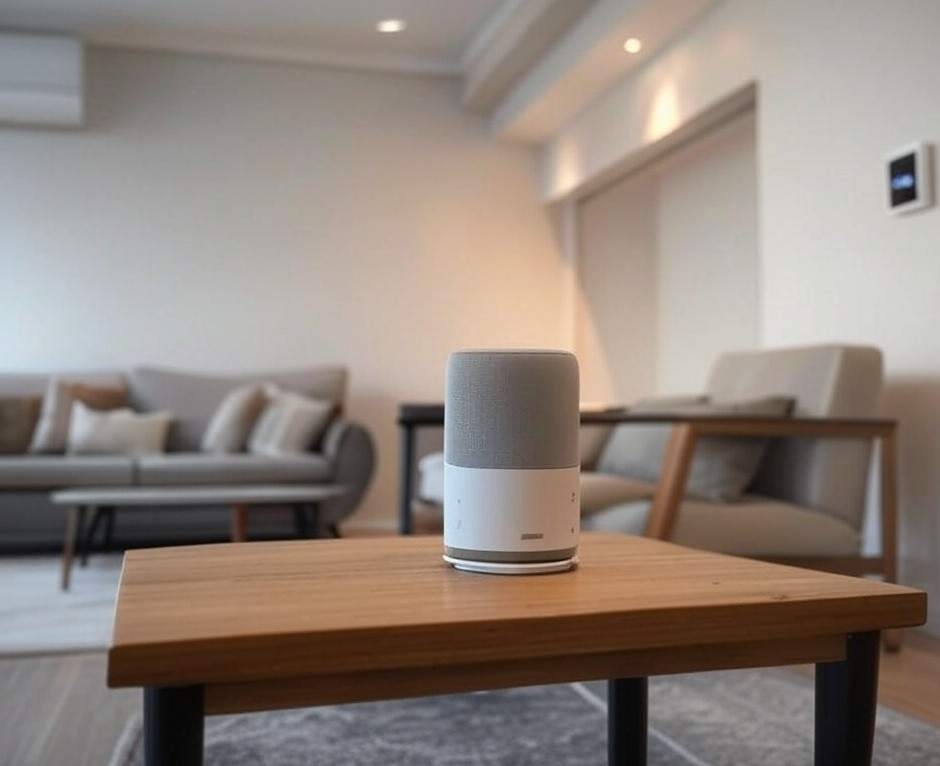
    Amazon Echo Dot or Google Nest Mini lets you control devices with your voice—no wiring needed.

    2. Smart Plugs ($10-$20)

    Same as above—plug and play, no installation required. Turn your landlord’s old lamp into a smart one!

    3. Battery-Powered Cameras ($50-$100)

    Arlo or Blink cameras stick anywhere with adhesive—no drilling. Take them when you move.

    Tip: Check your lease, but most landlords won’t mind non-permanent upgrades.

    Bonus: Fun and Fascinating Perks

    – Health Boost: Connect wearables to smart lights for workout vibes (CEDIA, 2024).

    – Luxury Car Tie-In: Some systems (like Tesla’s app) can sync with your garage door—perfect for car enthusiasts!

    – Design Wow-Factor: Automated blinds or mood lighting elevate your home’s style.

    43% of homeowners under 35 plan to add smart features in the next three years (Joint Center for Housing Studies, 2016). The future is now!

    Home automation is more than a trend—it’s a way to save, secure, and simplify your life. Whether you own or rent, start small with a smart plug or bulb, and watch your home transform. At EveryBitMatters, we believe every bit of progress counts—let OmniScope guide you to a smarter, more enjoyable home. What’s your first step? Let us know in the comments!