Blog
-

Why Yawns Are Contagious: The Bizarre Biology of a Sleepy Chain Reaction
By EBMOmniscope
Yawn with me. Go on—open wide, let it out. Feel that stretch? Now picture this: you’re in a quiet room, someone yawns, and suddenly you’re doing it too. Then the guy next to you joins in, and it’s a sleepy domino effect. Why does that happen? Yawns aren’t germs, so why do they spread like a cold? It’s one of life’s little mysteries—half annoying, half hilarious—and the answer’s a wild mix of brain tricks, social glue, and maybe even ancient survival hacks. Let’s dig into the science of the yawn and why it’s the weirdest chain reaction you can’t resist.
The Yawn Basics
First, what is a yawn? It’s your mouth gaping, lungs gulping air, and sometimes a squeaky sound sneaking out. Scientists say it cools your brain—literally. Your head’s a hot little engine, and yawning’s like cracking a window when it overheats. A 2014 study found yawns peak when your skull’s temp climbs, like after a long day or a stuffy room. It’s why you yawn when you’re tired or bored—your brain’s begging for a breeze.
But here’s the kicker: yawning’s not just a solo act. See a yawn, hear a yawn, even think about yawning (admit it, you’re tempted now), and boom—you’re hooked. It’s contagious, and not just for humans. Dogs catch it from us. Chimps pass it around. Even parrots might join the party. So, what’s wiring us to copycat?
The Empathy Connection
One big clue? Your brain’s social side. Scientists point to mirror neurons—tiny cells that fire when you do something or see someone else do it. Watch a friend grab a snack, and your brain lights up like you’re munching too. Same with yawning. A 2003 study hooked people to brain scanners and showed them yawn videos. Guess what? The empathy zones—parts tied to understanding others—went wild. The more you care about someone, the more likely you’ll catch their yawn. It’s why your bestie’s yawn gets you, but a stranger’s might not.
Kids under four don’t do it much—they’re still building that empathy muscle. Same with folks on the autism spectrum, who often process social cues differently. It’s not a rule, but it hints yawning’s a “me too” signal, a way to sync up with your crew.
The Pack Instinct
Rewind a few million years. Our ancestors lived in groups—safety in numbers. Yawning might’ve been a silent memo: “I’m sleepy, let’s rest.” If one caveman yawned and the others followed, the whole gang could nap together, staying alert for saber-tooth tigers. A 2017 study on baboons backs this up—they yawn more when their troop’s winding down. It’s like nature’s group chat, keeping everyone on the same page.
Or maybe it’s a vibe check. Lions yawn to signal a hunt’s over—time to chill. For us, a shared yawn might say, “We’re cool, no stress here.” It’s less about words, more about feeling connected. Next time you yawn at a meeting, you’re basically primal-bonding with your coworkers. Weird flex, but okay.
The Mystery Lingers
Not everyone’s sold, though. Some say it’s simpler—yawning’s just catchy, like a laugh or a sneeze. Your brain sees a trigger and hits copy-paste, no deep meaning required. Others argue it’s about temperature still—if your pal yawns to cool off, you might need to as well in the same hot cave (or office). A 2011 experiment tested this: people yawned less with cold packs on their heads. So maybe it’s practical, not profound.
And get this—it’s not foolproof. About half of us catch yawns from watching them. The other half? Immune, smirking at the rest of us mid-gape. Why the split? No one’s cracked it yet. Maybe it’s personality, maybe it’s luck. Science is still yawning over the details.
The Yawn’s Sneaky Power
Here’s the fun part: yawning’s a ninja. You don’t decide to catch it—it just happens. Try resisting next time someone lets one rip nearby. Bet you can’t. It’s a reflex with swagger, sneaking past your willpower. And it’s universal—cross cultures, species, even time. Shakespeare’s characters yawned. Dinosaurs probably did too (imagine a T-Rex mid-roar). It’s the oldest trick in the book, and we’re all suckers for it.
So why’s it contagious? It’s your brain cooling off, your empathy flexing, and maybe your inner pack animal saying hi—all rolled into one stretchy, sleepy moment. Next time you spark a yawn chain, don’t blush—own it. You’re a walking biology lesson, and the room’s your lab.
-
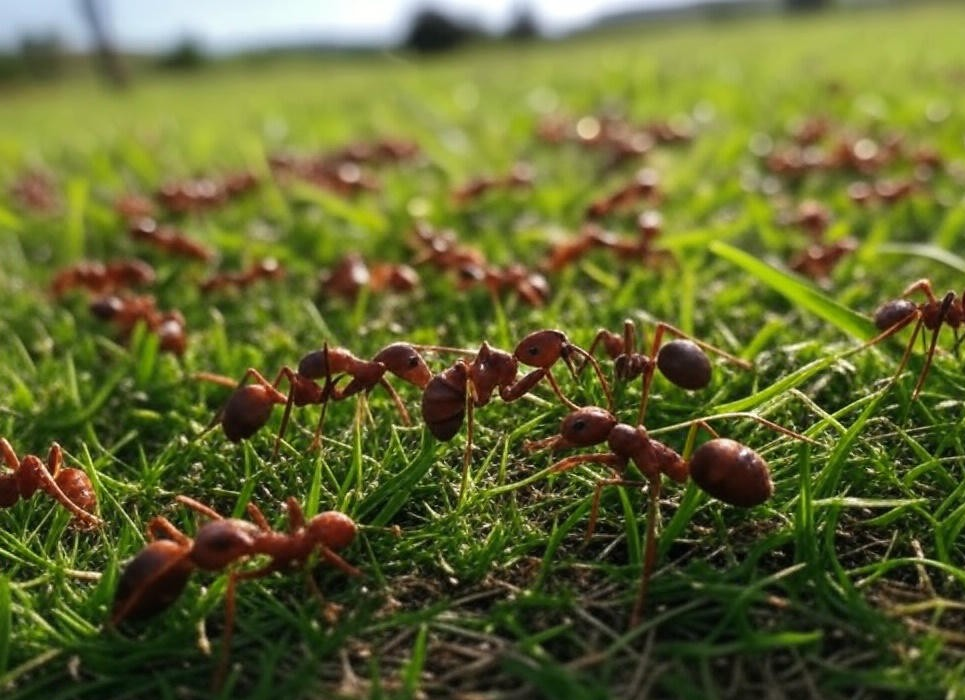
The Ants’ Internet: How Ant Colonies ‘Network’ Like a Living Web
By EBMOmniScope
Ants. Tiny, relentless, and everywhere. You’ve probably seen them marching in a line, hauling crumbs bigger than their heads, or turning your picnic into their buffet. They seem simple, right? Just little bugs doing bug things. But zoom in, and you’ll find something wild: ant colonies don’t just work together—they network. Like a living, breathing internet, they share info, solve problems, and adapt in ways that make our Wi-Fi look sluggish. How do these six-legged wonders pull it off? What’s the secret behind their tiny, chaotic empire? Let’s crawl into the ant world and uncover a system so smart it’s almost sci-fi.
The Colony: A Super-Brain with No Boss
First off, ants don’t have a CEO. There’s no “head ant” barking orders from a tiny throne. The queen? She’s just an egg-laying machine, not a mastermind. Yet somehow, a colony of thousands—or even millions—acts like one big brain. They find food, build tunnels, fight enemies, and even farm fungi, all without a playbook. Scientists call this a “superorganism,” where the group’s smarts come from everyone pitching in. It’s teamwork on steroids.
How do they sync up? The answer’s in their version of the internet: a mix of chemical signals, touch, and some seriously clever instincts. Think of it like data packets zipping through a network, only instead of cables, it’s pheromones and antennae. Each ant’s a node, sending and receiving info, building a web that’s alive and always updating. No Zoom calls needed—just pure, organic connection.
Pheromones: The Ants’ Wi-Fi
The backbone of this network is smell. Ants “talk” with pheromones—chemicals they drop like digital breadcrumbs. When a scout finds food, she lays a scent trail back to the nest, shouting, “Jackpot over here!” Other ants sniff it out, follow the path, and add their own pheromones to strengthen the signal. The more ants, the stronger the trail, like a trending hashtag going viral. If the food runs out, the scent fades, and the ants move on. It’s a self-updating system—no IT guy required.
But it’s not just one smell. Ants have a whole chemical vocabulary. One pheromone might mean “danger,” another “dig here,” and a third “feed the babies.” Researchers have found some species, like Argentine ants, use dozens of these signals. It’s like they’ve got emojis for every mood, and every ant’s tuned in, sniffing the air for the latest update.
Traffic Jams and Smart Routing
Ever watch ants march in a perfect line? That’s their network in action. They’re not just following blindly—they’re optimizing. In the 1990s, scientists like Deborah Gordon studied how harvester ants adjust their paths. If too many crowd one route, some peel off to find a shortcut, laying new trails. It’s like Google Maps rerouting you around a jam, but with no satellites—just instinct and teamwork.
This isn’t random. Math geeks love ants because their patterns mimic something called “ant colony optimization,” a computer algorithm inspired by these critters. It’s used to solve real-world problems, like finding the fastest delivery routes or untangling internet traffic. Ants figured it out first, though—millions of years before we did. Their network doesn’t crash; it adapts.
The Hive Mind Goes Viral
Here’s where it gets freaky: ants don’t just share directions—they share ideas. Take leafcutter ants. They don’t eat the leaves they snip—they grow fungus with them, like tiny farmers. How’d they learn that? No one taught them. The colony “knows” because the network passes it down. Young ants watch, smell, and copy, keeping the system humming. It’s like a living Wikipedia, edited by every ant who’s ever hauled a leaf.
Or consider Argentine ants. They’ve built a global “supercolony” stretching from Spain to Japan. Millions of nests, billions of ants, all recognizing each other by scent. If two groups meet, they don’t fight—they link up, sharing resources like nodes on a massive server. It’s a network so big it rivals human cities, and it’s all run by bugs smaller than your pinky nail.
When the Network Fights Back
Ants don’t mess around when their web’s threatened. Army ants, for example, turn their network into a war machine. They swarm in waves, guided by pheromone trails, taking down prey 100 times their size. Their “data” flows fast—scouts report, soldiers move, and the colony eats. It’s brutal but brilliant, like a DDoS attack with mandibles.
Even cooler? Some ants use their network to build. Weaver ants stitch leaves into nests using silk from their larvae, passing the kids around like tools. Each ant knows its job—pull here, glue there—because the network tells them. It’s construction by consensus, and the result’s a fortress hanging in a tree. Try that, Silicon Valley.
Why It’s Smarter Than Us (Sometimes)
Our internet’s fast, sure, but it’s fragile. One cut cable, one power outage, and we’re toast. Ants? Their network’s decentralized—no single point of failure. If a flood wipes out half the colony, the rest regroup, rebuild, and keep going. It’s not about one ant; it’s about the system. In 2011, researchers at Stanford found that ant trails recover from disruptions faster than human traffic grids. Next time you’re stuck on the highway, blame it on us not being ant-enough.
And get this: ants don’t overthink. We humans debate, plan, and second-guess. Ants act. Their network’s simple rules—follow the scent, help the team—let them solve complex problems without a meeting. Scientists call it “emergent behavior”: big results from small steps. It’s why they can raid your kitchen before you even notice the spill.
What We’re Stealing from the Ants
Humans are obsessed with this. Engineers study ant networks to design better robots—swarms that explore Mars or clean up oil spills, talking to each other like ants do. Computer scientists tweak their algorithms for everything from logistics to AI. Even architects look at ant tunnels for ideas on ventilation or crowd flow. The ants’ internet isn’t just cool—it’s useful.
And it’s not all techy stuff. Ants teach us about connection. They thrive because they share, adapt, and don’t sweat the small stuff. In a world where we’re glued to screens, maybe there’s a lesson in watching those little marchers. Their network’s been online for 100 million years—no updates needed.
Step Into the Ant Web
So, how do ants network like a living internet? It’s pheromones, teamwork, and a knack for keeping it simple. Each ant’s a signal, each trail a wire, linking up into a system that’s smarter than the sum of its parts. It’s not just survival—it’s a masterpiece of nature’s design, humming along under our feet.
Next time you see an ant line, don’t just grab the bug spray. Watch them. Smell the faint tang of their trails if you lean in close (don’t judge—it’s research!). You’re looking at a web that’s been connecting longer than ours, with no passwords or pop-up ads. It’s tiny, chaotic, and brilliant—and it’s been outsmarting us since the dinosaurs. Who needs fiber optics when you’ve got ants?
-
Breaking Free: Your Journey Beyond Addiction

Chapter 12: Cravings: Your Brain’s Trick That urge? It’s not you—it’s chemistry. You made it through day one—huge, seriously—and now cravings are …
Breaking Free: Your Journey Beyond Addiction -

The Smell of Old Books: What’s Behind That Scent, and Why We Love It
By EBMomniScope
There’s something magical about cracking open an old book. You know the feeling: the creak of the spine, the yellowed pages whispering secrets of the past, and that smell. Oh, that smell! It’s musty yet sweet, a little like vanilla with a hint of damp wood and a whiff of something you can’t quite place. It’s not just nostalgia—it’s a sensory time machine. But what is that scent, really? Why does it hit us right in the feels? And why do some of us (yes, I’m guilty) secretly want to bottle it up and spritz it around like perfume? Let’s dive into the science, history, and downright weirdness of the old-book smell—and why it’s more than just a quirky obsession.
The Chemistry of a Sniff
First things first: that smell isn’t an accident. It’s a chemical cocktail brewed over decades—or even centuries—by the slow breakdown of a book’s ingredients. Paper, ink, and glue don’t just sit there looking pretty; they age, and as they do, they release tiny molecules into the air that your nose picks up like a detective on a case. Scientists call these “volatile organic compounds” (VOCs), but don’t let the fancy term scare you—it’s just stuff that floats around and smells interesting.
Most old books start with paper made from wood pulp. Back in the day (think 19th century and earlier), paper often came from cotton or linen rags, but as printing boomed, cheaper wood-based paper took over. Wood contains lignin, a natural glue that holds plant fibers together. Over time, lignin breaks down when exposed to light, air, and moisture. As it degrades, it releases compounds like toluene and ethylbenzene, which give off a faint almond-like sweetness. That’s part of the magic right there.
Then there’s cellulose, the main building block of paper. As it ages, it oxidizes—think of it like the paper rusting—and spits out furfural, a molecule with a warm, caramel vibe. Add in the slow decay of glue (often animal-based in older books) and ink (sometimes laced with oils or metals), and you’ve got a symphony of scents: woody, nutty, a little sour, and oddly cozy. It’s not one smell—it’s a whole playlist.
A Library’s Secret Recipe
But here’s the kicker: every old book smells a little different. A leather-bound tome from 1750 won’t smell like a paperback from 1975, and that’s because their “recipes” vary. Researchers at University College London once used a “smell wheel” (yes, that’s a real thing!) to analyze historic books. They found over 100 VOCs in play, from grassy notes to hints of chocolate. A book stored in a damp attic might lean musty, while one from a dry library could smell more like vanilla. It’s like each book has its own personality, etched into its scent.
This uniqueness is why some scientists are sniffing out old books for more than just fun. Conservators use the smell to diagnose a book’s health. Too much acetic acid (think vinegar) might mean the paper’s breaking down fast. A whiff of mold could signal trouble. There *Sniffing books isn’t just a quirky pastime—it’s a preservation tool. Who knew your nose could be a librarian’s best friend?
The Brain’s Love Affair with the Smell
So, the smell comes from chemistry—but why do we love it? That’s where your brain comes in. Smell is the ninja of your senses. Unlike sight or sound, it sneaks straight to the amygdala and hippocampus, parts of your brain tied to emotion and memory. One whiff of an old book can zap you back to your grandma’s attic, a dusty bookstore, or that rainy afternoon you spent lost in a story. It’s not just a smell; it’s a feeling.
Psychologists call this the Proustian effect, named after writer Marcel Proust, who famously described how a whiff of a madeleine cookie dunked in tea unlocked a flood of childhood memories. Old-book smell does the same trick. It’s tied to quiet moments, curiosity, and the thrill of discovery. Even if you’re not a bookworm, the scent taps into something primal—our ancestors used smell to find food or avoid danger, so we’re wired to pay attention to it.
And here’s a fun twist: studies show familiar smells can lower stress. In a 2019 experiment, people who sniffed nostalgic scents (like old paper or vinyl records) reported feeling calmer and happier. So, that old-book smell? It’s basically free therapy.
A Scent with a Story
The smell of old books isn’t just science—it’s history you can inhale. Books have been around for millennia, but the scent we love today really kicked off with the printing revolution. In the 1400s, Gutenberg’s press made books cheaper, and by the 1800s, mass production meant more wood-pulp paper and more of that signature aroma. Every sniff is a tiny echo of the Industrial Revolution, the rise of libraries, and the spread of ideas.
Some books even carry their own tales in their scent. A first-edition Moby-Dick might still hold traces of whale oil from its era’s ink. A Victorian novel could hint at coal smoke from the fireplaces it sat near. It’s like the book’s been collecting souvenirs from its journey—and your nose gets to unpack them.
The Cult of the Book Sniffers
People don’t just love this smell—they obsess over it. There’s a whole subculture of book-sniffers out there. Perfumers have tried to bottle it—check out “Paper Passion,” a fragrance that mixes woody notes with a hint of dust. Candle makers sell “Old Library Glow” or “Bookstore Nook” scents. Etsy’s full of handmade soaps claiming to capture the vibe. It’s a mini industry built on our weird love for this aroma.
And it’s not just modern fans. In the 1920s, a guy named H.P. Lovecraft (yep, the horror writer) raved about “the curious musty odor” of ancient tomes in his stories. Victorian poets wrote odes to the “fragrance of vellum.” We’ve been hooked for ages.
Why It’s More Than a Smell
Here’s the real kicker: that smell is a quiet rebellion. In a world of e-books, screens, and instant everything, old books fight back with something digital can’t copy—texture, weight, and yes, scent. It’s analog in a digital age, a little “take that” to the march of progress. Every whiff reminds us of a slower time, when stories took effort to find and keep.
So next time you grab an old book, don’t just read it—sniff it. Let the lignin and cellulose tell you their tale. It’s not just a smell; it’s a portal to science, history, and a bit of your own past. And if anyone catches you with your nose buried in the pages, just smile and say, “I’m doing research.” Because now, you kind of are.
-

When Sand Sings: The Eerie Music of Dunes and What Causes It
By EBMOmniScope
Imagine you’re trekking across a desert, the sun beating down, the horizon shimmering with heat. It’s silent—until it’s not. Suddenly, a low hum rises from the sand beneath your feet, like a cello warming up or a distant spaceship powering on. It grows into a haunting drone, vibrating through the air, maybe even your bones. You’re not hallucinating, and it’s not a movie soundtrack. It’s real. Some sand dunes sing, and the sound is as eerie as it is mesmerizing. But what’s behind this natural symphony? Why does sand decide to serenade us? Grab a water bottle and let’s wander into the weird, wonderful world of singing dunes.
The Sound of the Sands
Singing sand isn’t new—people have been hearing it for centuries. Marco Polo wrote about it in the 13th century, describing “evil spirits” making drum-like noises in the Gobi Desert. Bedouin nomads called it the “song of the sands” and spun tales of djinn playing tricks. Even Charles Darwin jotted notes about it during his travels. Today, we know it’s not ghosts or magic—it’s physics—but that doesn’t make it any less cool.
The sound can vary. Sometimes it’s a deep boom, like thunder rolling underground. Other times it’s a high-pitched whistle or a rhythmic bark. In California’s Kelso Dunes, it’s been compared to a foghorn. In Morocco’s Sahara, it might mimic a didgeridoo. Scientists have clocked these noises anywhere from 50 to 300 hertz—low enough to feel in your chest—and they can last seconds or minutes, loud enough to hear a mile away. It’s not every dune, though. Only about 40 spots worldwide, from Chile to Mongolia, have this talent. So, what’s the secret?
The Recipe for a Sandy Song
Turns out, singing sand is picky. It needs the right ingredients and conditions to perform. First, the sand itself has to be just so. Most singing dunes are made of quartz grains—tiny, tough crystals that have been polished by wind into near-perfect spheres. Size matters too: the grains are usually between 0.1 and 0.5 millimeters across. Too big or too small, and the magic fizzles.
Next, the sand needs to be dry. Moisture mutes it, which is why you won’t hear soggy beach sand belting out tunes. The dune’s shape plays a role too—steep slopes, often 30 degrees or more, set the stage. But the real kickstarter? Movement. When wind or a foot (yours, maybe) pushes the sand downhill, it starts to slide in layers. That’s when the music begins.
Picture this: as the grains tumble, they rub against each other, bouncing and vibrating like a million little drumsticks. Scientists think these collisions create pressure waves in the air trapped between the grains. Those waves sync up, amplifying into a sound you can hear. It’s like the sand’s throwing its own mini-concert, with each grain playing a note. The dune’s surface acts like a speaker, boosting the vibe. Cool, right?
The Science Gets Weird
But here’s where it gets wild: not all experts agree on the details. Some say the sound comes from the grains’ vibrations syncing up, a bit like a choir finding harmony. Others argue it’s more about the air itself, squeezed and released as the sand shifts, like a natural bellows. In 2007, French physicist Stéphane Douady tested this by making mini-dunes in a lab. He found that the frequency of the sound matched the speed of the sand’s flow—faster slides, higher notes. Slow it down, and the pitch drops.
Then there’s the “burping” theory. Some dunes don’t sing until a big avalanche happens, letting out a single, loud groan. Researchers in Qatar found that these bursts might come from air pockets collapsing deep in the dune, like a sandy belch. It’s not a constant hum—it’s a one-off roar. Different dunes, different styles. Nature’s got range.
Where to Hear the Show
If you’re itching to hear this for yourself, you’ve got options. In the U.S., head to Death Valley’s Eureka Dunes or Nevada’s Sand Mountain—both are known crooners. Chile’s Copiapó Desert has a famous singing spot, and Oman’s Wahiba Sands belt out tunes for lucky travelers. China’s Badain Jaran Desert boasts dunes so loud they’ve been nicknamed “Booming Sands.” Each place has its own flavor, shaped by the local sand and wind.
You don’t need fancy gear to trigger it—just scoot down a slope or kick some sand loose. Fair warning, though: it’s not a guarantee. The dune might be in a quiet mood if the wind’s off or the sand’s too wet. Patience is key. When it works, though, it’s a front-row seat to one of Earth’s strangest gigs.
Why It Freaks Us Out (and Thrills Us)
That eerie sound? It’s not just random noise—it taps into something deep. Low frequencies, like the ones singing dunes make, often signal big, powerful things in nature: thunderstorms, earthquakes, a lion’s roar. Our brains are wired to perk up at those rumbles, a leftover from when survival meant listening for danger. So when a dune starts humming, it’s thrilling but also a little spooky—like the Earth itself is whispering.
Add in the setting—vast, empty deserts—and you’ve got a recipe for awe. No wonder ancient travelers thought spirits were involved. Even today, the sound feels otherworldly, like a sci-fi soundtrack come to life. It’s raw, unpolished, and totally natural, which makes it stick with you long after the echo fades.
Sand’s Big Moment
Singing dunes aren’t just a cool party trick—they’re teaching us stuff. Geologists use the sound to study how dunes form and move. The vibrations hint at what’s happening under the surface, like a sandy X-ray. Some researchers even think it could help us understand distant planets. Mars has dunes, and if we ever hear them sing through a rover’s mic, it might reveal secrets about the Red Planet’s winds or soil.
Back on Earth, the phenomenon’s a reminder of how lively “dead” landscapes can be. Deserts aren’t just silent wastelands—they’ve got character, personality, and a voice. Next time you see a dune on TV or in a photo, imagine it humming a tune. It’s not as quiet as it looks.
Your Turn to Listen
So, why does sand sing? It’s a mix of perfect grains, dry air, and a good shove, all coming together to vibrate the world around them. It’s physics with a flair for drama. And why do we love it? Because it’s strange, beautiful, and a little bit wild—like a secret only the desert knows, shared with anyone brave enough to listen.
If you ever get the chance, chase down a singing dune. Slide down its slope, feel the rumble, and let the sand serenade you. It’s not just a sound—it’s a story, millions of grains strong, playing a song that’s been around longer than any of us. And if you can’t make the trip? Well, now you know the trick. Next time you’re near a sandbox, give it a kick and listen close. You might not get a symphony, but you’ll smile thinking about the dunes that do.
-
Pregnancy: Your Amazing Journey from “Oh Wow!” to “Hello, Baby!” – PREVIEW. Now available on Apple book and Amazon stores!
Chapter 5: Cravings: Why You’re suddenly Obsessed with Pickles and Ice Cream Pregnancy cravings—oh boy, they’re a thing! One minute you’re fine, the …
Pregnancy: Your Amazing Journey from “Oh Wow!” to “Hello, Baby!” – PREVIEW -
An Excerpt from the book titled; A Compassionate Guide to Understanding and Managing Head Trauma – a masterclass in resilience” – Available on Amazon kindle unlimited for free!

Chapter 7: When Intervention Isn’t an Option Sometimes, the kindest choice is to step back. This is the hardest part to write—and likely the hardest …
An Excerpt from the book titled; A Compassionate Guide to Understanding and Managing Head Trauma – a masterclass in resilience” -
Breaking Free: Your Journey Beyond Addiction
Chapter 3: The Roots of Your Addiction Ever wonder why this started? Why that first drink, that first hit, that first whatever turned into a grip you…
Breaking Free: Your Journey Beyond Addiction